





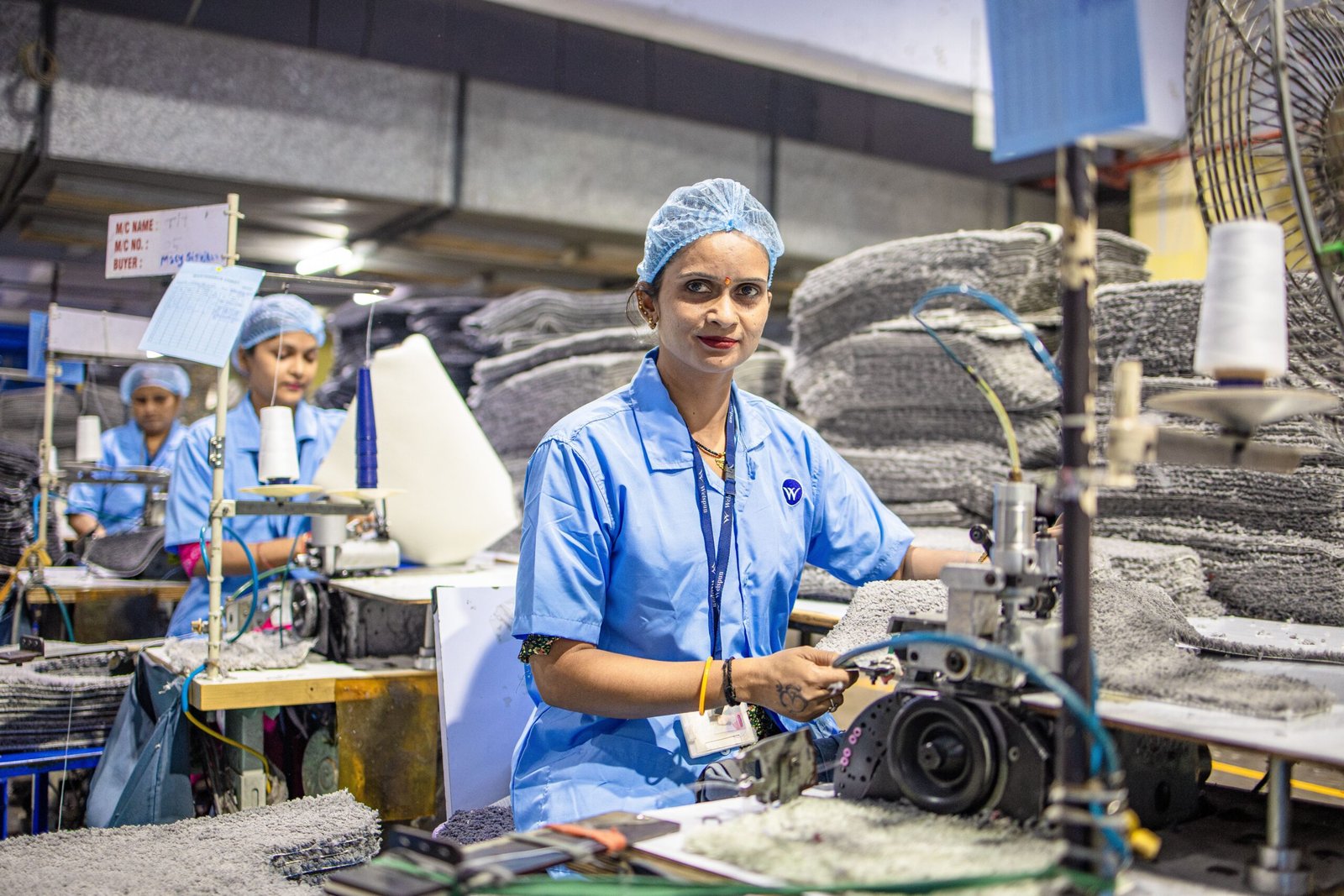
There was an era, wherein it was considered sexy to be dumb. Objectifying slangs like ‘bimbo’, ‘barbie brain’ and ‘bad with money’ were rather looked at as ways to glamorize women with money and never-ending credit limit. But the dichotomy between women and numbers has been mulled into a sexist movement highlighting women as some serial money killer!
I’ve read a lot about girl math, which began as an internet joke, has been turned into the societal stereotype, labeling women as generally dumb. Some of the crazy rules of this outrageously hurtful label are:
- Anything under $5 is practically free.
- If you’re paying cash, consider it free too.
- Buying a dress? That’s half the price you’re putting into an entire outfit culminated into one.
- $100 sweater becomes $1 if worn 100 times?
This is just a trivial aspect of the bigger picture, “Leave the math to men, women! You can’t handle numbers, complex equations and money management.” The most overwhelming part being women accepting the same as “being women”. I mean they rather consider it okay to be bad at math and often say, yeah, “I can’t handle numbers. Period.” Or “Is it even a social bias?”

The insidious manner in which this stigma has infiltrated behavioral conditioning, employment biases, and even the architecture of female identity has systematically eclipsed the extraordinary intellectual caliber women possess. What is perhaps even more astonishing is how enthusiastically women themselves have begun to embody this narrative. They wear labels like shopaholic, terrible with numbers, or the ever-patronizing “I can do anything but math!” almost as badges of honor, blissfully unaware that they are perpetuating the very stereotype designed to diminish them.
Money, at its core, is nothing more than a sophisticated standardization of the ancient barter system. Somewhere along the way, society conveniently rebranded financial literacy as though it were synonymous with aeronautical engineering. Yes, trigonometry, congruency, and the Pythagorean theorem can appear intimidating—but so is carrying a pregnancy to term, surviving labor or a C-section, managing an entire household, stretching a domestic budget, and keeping an utterly dependent tiny human alive.

So the question deserves to be asked: if women possess the resilience to endure childbirth, navigate motherhood, and shoulder the invisible labor that sustains families, what exactly makes people believe they are incapable of understanding numbers? If they can leave behind the familiarity of their homes, assimilate into entirely new families, withstand unsolicited criticism from in-laws, relinquish financial autonomy, and repeatedly negotiate societal expectations, why is mathematics suddenly where their competence supposedly expires?
Perhaps the objective was never to convince women that they were incapable of arithmetic. Perhaps it was to ensure they remained sufficiently numerically illiterate to never calculate the true cost of their dependence. Because a woman who understands numbers eventually understands money. And a woman who understands money eventually begins to quantify her own freedom.
So, I took the liberty of reaching out to some real women, and investigate their stance on this nasty cliché.

“I’ve always found the stereotype that women are bad at math puzzling. I scored above average in mathematics myself, but chose biology because it was my passion, not because I lacked the ability to pursue math. I believe this perception is rooted more in long-standing social biases than in reality. Today, women are excelling alongside men in fields that demand strong mathematical and analytical skills—from engineering and finance to medicine and technology. It’s time we judged ability by aptitude and opportunity, not by gender.” Says Pankhuri Shandilya MS Obstetrics and Gynecology.
Well, true that, Doc! Sunita Williams, the space maestro doesn’t need any introduction. And she is a WOMAN, successfully navigating her married life alongside outshining most of the stars.

Vanshika Sharma, a bilingual quality analyst by profession but a rebel at heart does put up a strong argument “I feel that the stereotype that women are bad at math has long been used to undermine their confidence, especially when it comes to making important financial decisions. As a result, many women are encouraged to involve the men in their families rather than trust their own judgment. In reality, women have been skilled mathematicians and problem-solvers throughout history. With confidence in themselves and their abilities, they can achieve just as much as anyone else. Confidence, not gender, is what often makes the difference.”
Omgee, you almost made me cry, linguistic wizard! The bigger question here is, are our potential, capability and multi-dimensional problem-solving skills really devalued to bow down to the supreme mail authority?

Let’s see what business analyst Muskan Sharma has to say. “It’s not that women are bad at math It’s not that women are bad at math… we’re just not encouraged the same way. There’s this whole “girls can’t do math” narrative that lowkey makes us doubt about ourselves. And tbh, half of it is just mindset. If you keep hearing you’re not meant for something, you start believing it.” Well, hell yeah, engineer!
Why do women always end up being judged, questioned and scrutinized for their capabilities?

“Growing up, I never really liked math. It didn’t help that society constantly told me numbers, taxes, and even driving just weren’t for women. But as I worked toward my PhD in Psychology, I realized these stereotypes are just outdated barriers.
I had to learn to look past the doubt and trust my own capabilities. After all, if women were bad at Math, why would I defend an entire thesis based on quantitative analysis? Navigating these traditionally male-dominated fields taught me that financial literacy and complex reasoning belong to anyone willing to learn. We are successfully breaking down old biases every day, proving that capability has absolutely nothing to do with gender.” Says, Mansi Sharma, PhD, Clinical Psychology (Certified Clinical Hypnotherapy Practitioner, CHI, USA.) Well, you nailed it psychologist!
“Girls and boys have similar mathematical potential. However, stereotypes, societal expectations, and unequal encouragement can shape confidence and performance over time. The real question isn’t whether women are bad at math—it’s whether we’ve created an environment where everyone has an equal opportunity to excel.” Says corporate professional Ankita Sharma. Omgee, you’re so right, baddie!
Goddesses—whether you’re building a career, orchestrating a household, running a business, pursuing a degree, or doing all four before your morning coffee—stop allowing society’s exhausted stereotypes to occupy premium real estate in your mind. Every time you internalize them, you grant them precisely the legitimacy they never deserved.
If you can instinctively calculate a 50% + 40% sale, decipher the ever-chaotic “I’m not a robot” verification, stretch a monthly budget until payday, or flawlessly multitask through the logistical acrobatics of everyday life, congratulations—you’ve already demonstrated cognitive agility that would humble plenty of men.
And as for the “girl math” stereotype?
It can gracefully take its misogynistic mediocrity elsewhere and kiss your impeccably unapologetic, financially literate, fabulously sassy ass.
Because intelligence was never gendered.
Only the narrative was.
